What can the
systems show?
ForceDecks · Force
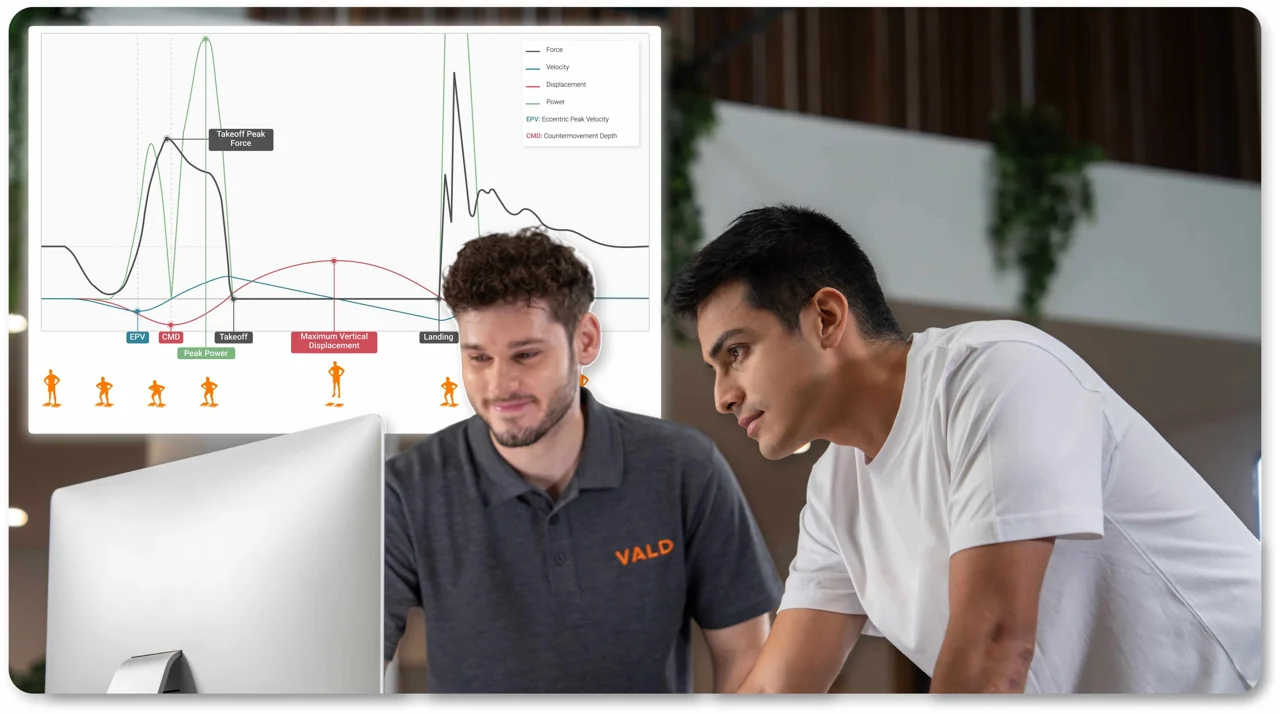
Force plates measure the forces applied to the ground. A jump becomes a way to explore how force changes throughout a movement.

02 / Research
Explore how strength and force production relate to sport performance, connecting doctoral research with opportunities for student learning and local collaboration.
WHAT A DAY COULD INCLUDE
Students can explore how performance is measured and how the results connect to PE, physics, mathematics, and careers in exercise science. The format will be developed with each host school.
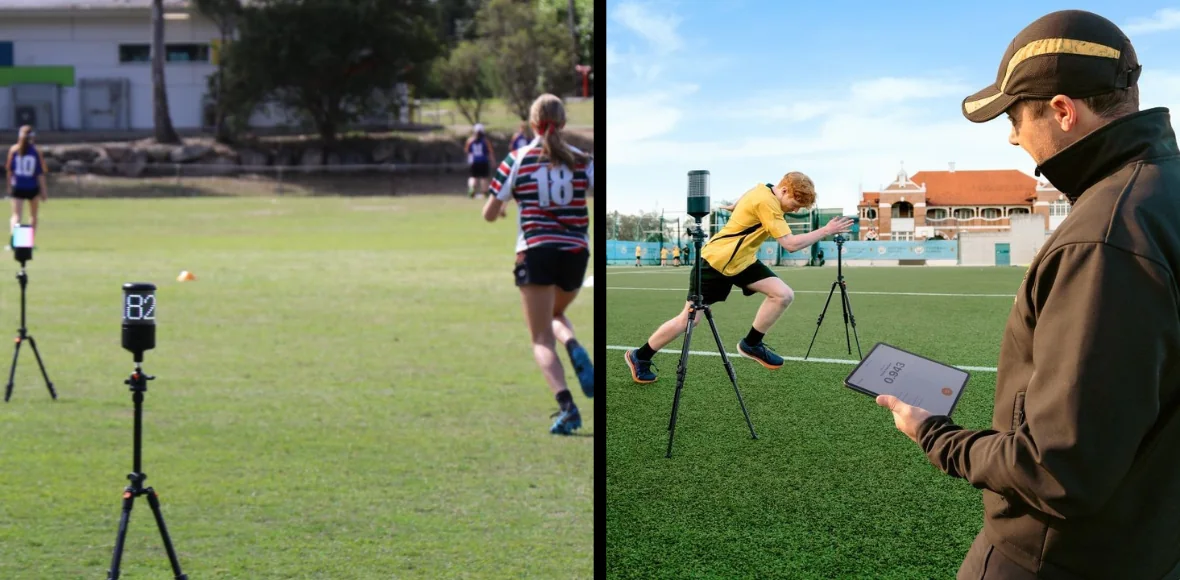
Watch a jump or sprint assessment and see how equipment captures something the eye or a stopwatch can miss.
Discuss force, time, and movement. Learn why clear instructions and consistent testing matter as much as the equipment.
Ask questions about coaching, kinesiology, and research—and what people working in those fields actually do.
Educational visits and research participation have separate arrangements. Who can be tested, and under what procedures, will be confirmed before each activity.
THE TECHNOLOGY, EXPLAINED
Force plates measure the forces applied to the ground. A jump becomes a way to explore how force changes throughout a movement.
Timing gates record sprint times and splits. Students can connect a familiar activity with questions about speed and measurement.
These are examples of systems that may be demonstrated. Equipment and tests will follow the activity’s goals and the finalized research protocol.
THE DOCTORAL RESEARCH CONNECTION
Josh Amaral’s proposed dissertation examines strength and how quickly force develops in lengthened and shortened muscle positions, then explores how those measurements relate to jumping and sprinting.
The question: do comparisons between positions tell us something useful beyond how strong a person is overall?
Measure force in positions that place the tested muscles at longer and shorter lengths.
Examine how much force someone produces and how quickly it builds—rate of force development, or RFD.
Look for relationships between the strength measurements and performance on movement tasks.
The proposed design is cross-sectional and observational: assess characteristics during a testing period and examine their relationships. It does not involve assigning a training intervention.
The planned analysis includes strength and RFD at lengthened and shortened positions, ratios between positions, and whether they add information beyond overall strength. Associations would not establish cause and effect.
The revised protocol and required academic and institutional review are still being finalized. Research enrollment is not open. Eligibility, consent procedures, and the final test battery will be shared through the approved study process.
PLANNING A DAY WITH YOUR SCHOOL
Start with a conversation. Tell Josh about your school, students, and learning goals. We can then discuss a suitable format, space, schedule, and the people needed.
Discuss a school visitDates and locations are still being developed with potential hosts. You can request updates now; a confirmed schedule will be published when arrangements are ready.
Planned testing opportunities will be offered at no cost. No equipment purchase or paid-service commitment is required. Each host’s space, supervision, and scheduling arrangements will be discussed before confirming an activity.
Yes—educational observation and demonstrations are part of the opportunity being developed with schools. Research participation requires separate eligibility and consent procedures. Expressing interest does not enroll a student in research.
Research eligibility is not yet announced. The final age range, inclusion criteria, procedures, and consent requirements will follow the approved protocol. School learning opportunities and research eligibility are distinct.
Educators, coaches, practitioners, and researchers can contribute ideas, expertise, space, or local connections. Your idea can also extend beyond this project. Propose a collaboration.
Images are educational examples from VALD, not photographs of CVPP events. Education example · School testing example
System information: ForceDecks · SmartSpeed. Josh works with VALD; formal CVPP partnerships are identified separately.
HELP SHAPE THE NEXT STEP
Bring a research question, relevant expertise, or an idea for a school learning experience. Educational visits and research participation have separate arrangements.